
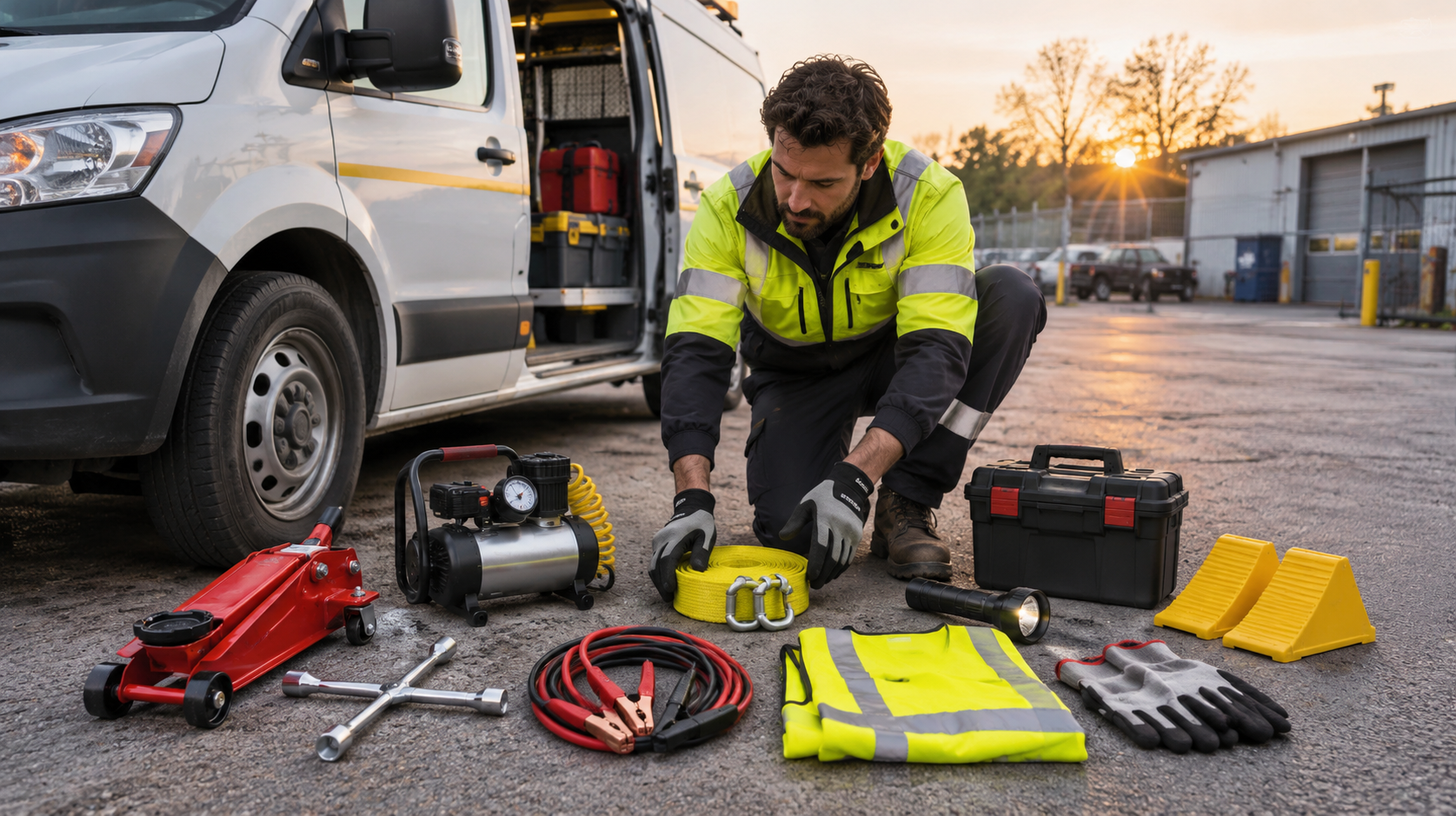
A dead battery. A flat tire on a dark highway. A driver locked out of a car. One missing tool can turn a quick roadside call into a long delay. A solid kit covers jump starts, tire changes, lockouts, and fuel delivery without wasting space.
1. Battery pack and jumper cables.
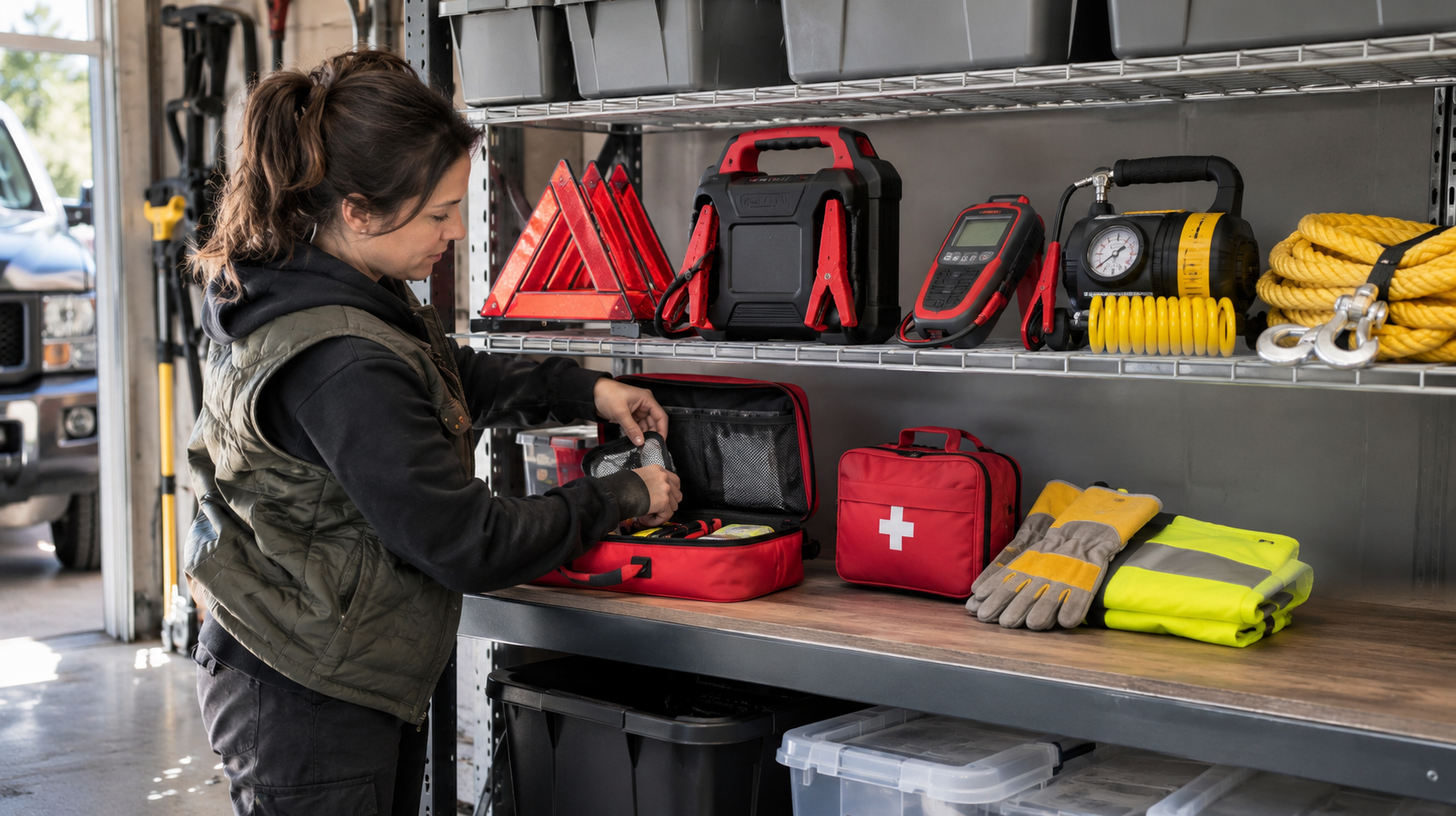
A strong portable jump starter should handle several vehicles on one charge. A jump start in Phoenix may be needed after prolonged summer heat, while a freezing morning in Minneapolis can leave a weak battery unable to start the engine. Long jumper cables provide backup. Electric and hybrid vehicles may need special low-voltage jump points. The owner’s manual sets the procedure.
2. Gas can and funnel.
An approved 2–5 gallon fuel container handles small deliveries. A fast-flow spout and capless funnel help with refueling. Fuel containers need secure storage outside the passenger cabin, in line with local rules.
3. Floor jacks and jack stands.
A 3-ton floor jack and a smaller low-profile jack cover a range of passenger vehicles. Rated jack stands, wheel chocks, and a solid base pad provide support. Lifting points and load limits vary, and a jack alone cannot safely hold a vehicle.
4. Breaker bar and socket sets.
Stubborn lug nuts call for a sturdy breaker bar. Useful extras include deep, thin-wall sockets, extensions, a stripped lug nut remover, spline sockets, and a lug nut cap puller.
5. Impact wrench and torque wrench.
A cordless impact wrench saves time on wheel changes. A calibrated torque wrench handles final tightening to factory specifications.
6. Fast air pump and tire gauge.
A battery-powered compressor restores tire pressure fast. A separate gauge confirms pressure. The correct target comes from the vehicle’s pressure label, not the tire sidewall.
7. Spare tire release tools.
Trucks, vans, and SUVs may store spares underneath. A universal release set helps when the factory tool is missing. A spare check before dispatch matters; some cars carry only an inflator kit.
8. Tire repair kit.
Plug tools can help with a temporary roadside fix, but a plug alone is not a permanent repair. Permanent repair requires internal inspection and a combined plug-and-patch. Sidewall damage is not suitable for plugging.
9. Lockout kit.
An air wedge, long-reach rod, and pull-up tool cover many common lockouts. Lockout service requires the vehicle owner’s authorization. Access methods vary by model, and care prevents damage to door seals, wiring, and trim.
10. Basic hand tools.
Screwdrivers, pliers, Allen keys, wire brushes, a rubber mallet, and terminal cleaners handle smaller jobs.
11. Battery analyzer.
A battery tester checks battery health and supports clearer advice on charging or replacement.
12. OBD-II scanner.
An OBD-II scanner reads fault codes on compatible vehicles. A code alone rarely confirms the cause.
13. High-visibility gear and warning lights.
A reflective vest, LED lights, and warning triangles improve visibility. Warning-light rules vary by area. A rechargeable headlamp leaves both hands free.
14. Gloves and emergency supplies.
Work gloves, eye protection, a first-aid kit, and a suitable fire extinguisher belong in the vehicle. Rain gear helps in bad weather.
15. Phone, headset, and power supply.
A phone mount, headset, charger, and inverter support dispatch. Digital job records and card payments cut paperwork.
Extra equipment for larger jobs
Spare tires, compatible replacement lug nuts, a small mobile tire changer, and specialty removal tools may be worth adding as demand grows.
Heavy-duty roadside work needs a separate setup: high-capacity jacks and stands, a heavy-duty impact wrench, truck tire gauges, suitable air equipment, and a calibrated torque wrench. Heavy trucks may also need dedicated 12/24V jump equipment. Truck work requires specific training and safety checks.
The first purchases should solve the most common calls. Charged batteries, inspected lifting gear, and sound tools prevent delays. When a roadside location is unsafe, towing is the safer service.